

Keynote speakers
Professor Peter D Eades
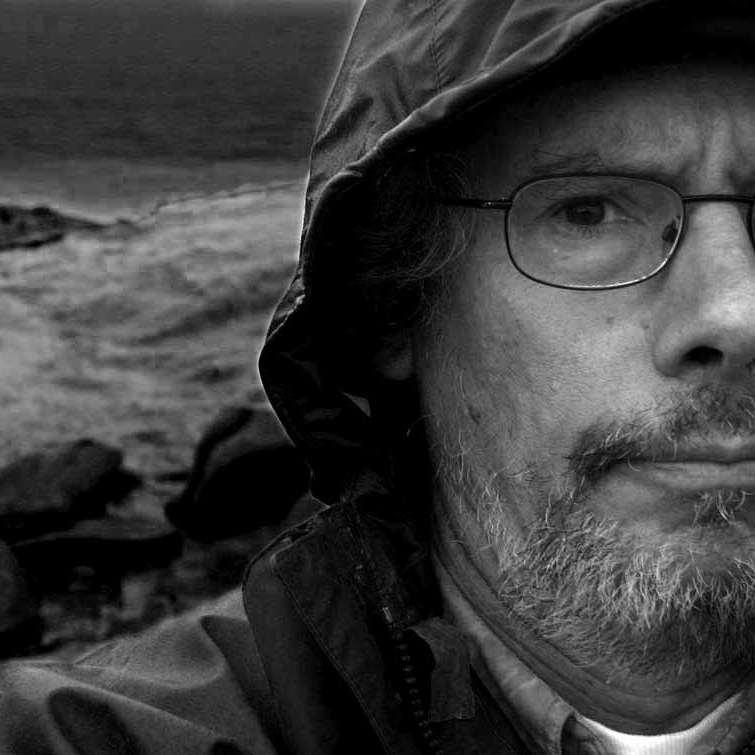
Emeritus Professor
School of Computer Science, The University of Sydney, Australia
Title:
Beautiful Networks
Abstract:
Visualizations of data are sometimes regarded as artworks. This talk describes two projects that aim to render networks as art works: GDot produces dot paintings in the style of Central Australia, and
CelticGraph produces pictures of networks as Celtic knots and links. Both projects involve difficult Mathematical problems in using Bézier curves to render paths in networks as smooth curves. We describe progress toward solutions of these problems.
Bio:
Peter D. Eades is an Emeritus Professor in the School of Computer Science at the University of Sydney, known for his expertise in Graph Drawing.
Professor Michael McGuffin
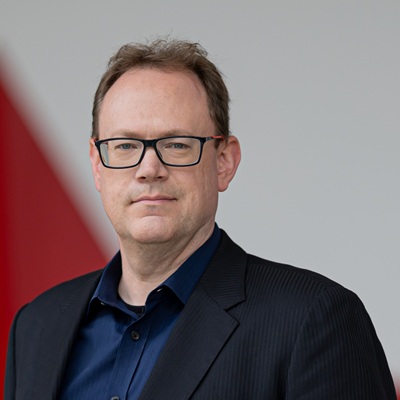
Department of Software and IT Engineering
Ecole de Technologie Superieure (ETS), Canada
Title:
Visualization as a Key for Unlocking Quantum Computing
Abstract:
Quantum computing (QC) leverages subtle physical phenomena to achieve computational performance beyond what is classically possible. At the same time, QC's heavy use of technical jargon, and lack of visual reasoning tools, make it difficult for newcomers to join the field, while also presenting a unique opportunity for researchers in human-computer interaction and information visualization. In this talk, I show a path for computer scientists into QC, and invite you to join a very small group of researchers inventing new interactive visualizations for understanding and designing quantum algorithms. First, we will consider general heuristics for choosing a research field or topic, and strategies for learning a new field such as QC. Second, we will cover some basics of QC, including how to simulate a quantum circuit by multiplying matrices together. This provides a convenient, accessible model for nonexperts to probe paradoxes and build intuition for phenomena such as superposition, entanglement, teleportation, and quantum magic (nonstabilizerness). Third, we will survey existing circuit visualizations, and consider problems that remain to be solved, including visualization of tensor networks, an exciting tool for accelerating computations.
Bio:
Michael McGuffin is a Professor at ETS, a French-language engineering school in Montreal, Canada, where his students have done research in human-computer interaction, information visualization, virtual and augmented reality. Previously, he did his bachelor's at University of Waterloo, worked at Alias|wavefront in Toronto, Softimage and Discreet Logic in Montreal, did his PhD under Ravin Balakrishnan at University of Toronto, and a postdoc in Igor Jurisica's bioinformatics lab. Since becoming a professor at ETS, he has spent time visiting and working within Ken Hinckley's group at Microsoft Research in Seattle, Xiaoru Yuan's lab in Beijing, Jean-Daniel Fekete's Aviz lab in Paris, and Giuseppe Di Battista's group in Rome. In 2009, his paper at the IEEE Information Visualization Conference (InfoVis 2009) received an Honorable Mention. His students, coauthors and he have published research on the space efficiency of tree visualizations (work with Jean-Marc Robert), a "Generalized Plot Matrix" (with Jean-François Im and Rock Leung), and visual programming (with Christopher Fuhrman). Most recently, McGuffin has been focused on visualization applied to quantum computing, is co-teaching a course on quantum algorithms, and is helping to establish a new institute in quantum science and engineering. https://profs.etsmtl.ca/mmcguffin/
Professor Kimbal Marriott
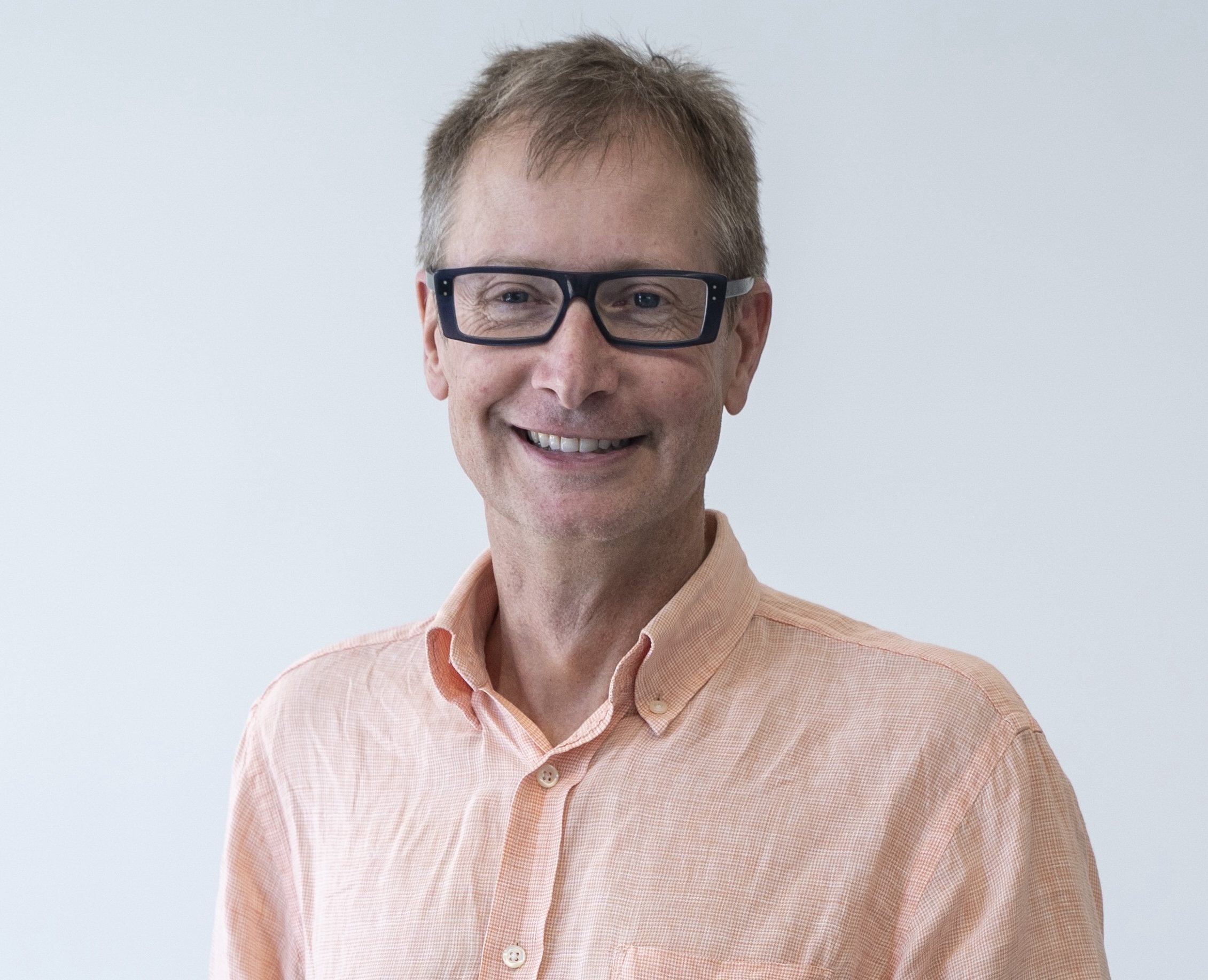
Department of Human Centred Computing, Faculty of Information Technology
Monash University
Title:
Data Visualization Without Vision: Designing Rich, Multimodal Data Experiences for People Who Are Blind
Abstract:
Our world is increasingly data-driven, and data visualization plays a pivotal role in understanding and using data. However, traditional data visualizations are designed for people who are able-bodied. This raises a serious equity issue with profound implications for education, employment and lifestyle. Here, I will focus on how we can provide rich, multimodal data experiences for people who are blind. These experiences are built around tactile graphics, graphics that are designed to be explored with the hands, not the eyes. I'll present three examples. The first investigates the combination of Multimodal Large Language Models (MLLMs) with refreshable tactile displays (RTDs) to support data analysis by blind data analysts. (RTDs are an emerging technology that use an array of pins that can be raised or lowered to create tactile graphics. The second and third projects are with Australian state education departments and disability organisations. In one project, we developed guidelines for the design and production of 3D-printed models for school students who are blind or have low vision, with a focus on STEM education. In a follow-up project, we are developing an accessible digital workbook for teaching secondary school mathematics, including data analysis. In conclusion, I will argue that we should broaden our understanding of data visualization to include other presentation modalities such as tactile graphics. Not only does this address a serious equity issue but it also provides a new way of thinking about data visualizations and raises a multitude of fascinating research questions.
Bio:
Kim obtained his PhD in 1989 and worked at the IBM TJ Watson Research Center before joining Monash University in Melbourne, Australia, in 1993, where he now leads the Monash Assistive Tech and Society (MATS) Centre. Kim's research is in both data visualization and accessibility, with a particular focus on the use of emerging technologies, such as AI and refreshable tactile displays, to support people who are blind or have low vision to access graphical materials. He also has an interest in the history of data visualization and recently published The Golden Age of Data Visualization: How Did We Get Here?, which details this history from 60,000 years ago to the present day.